
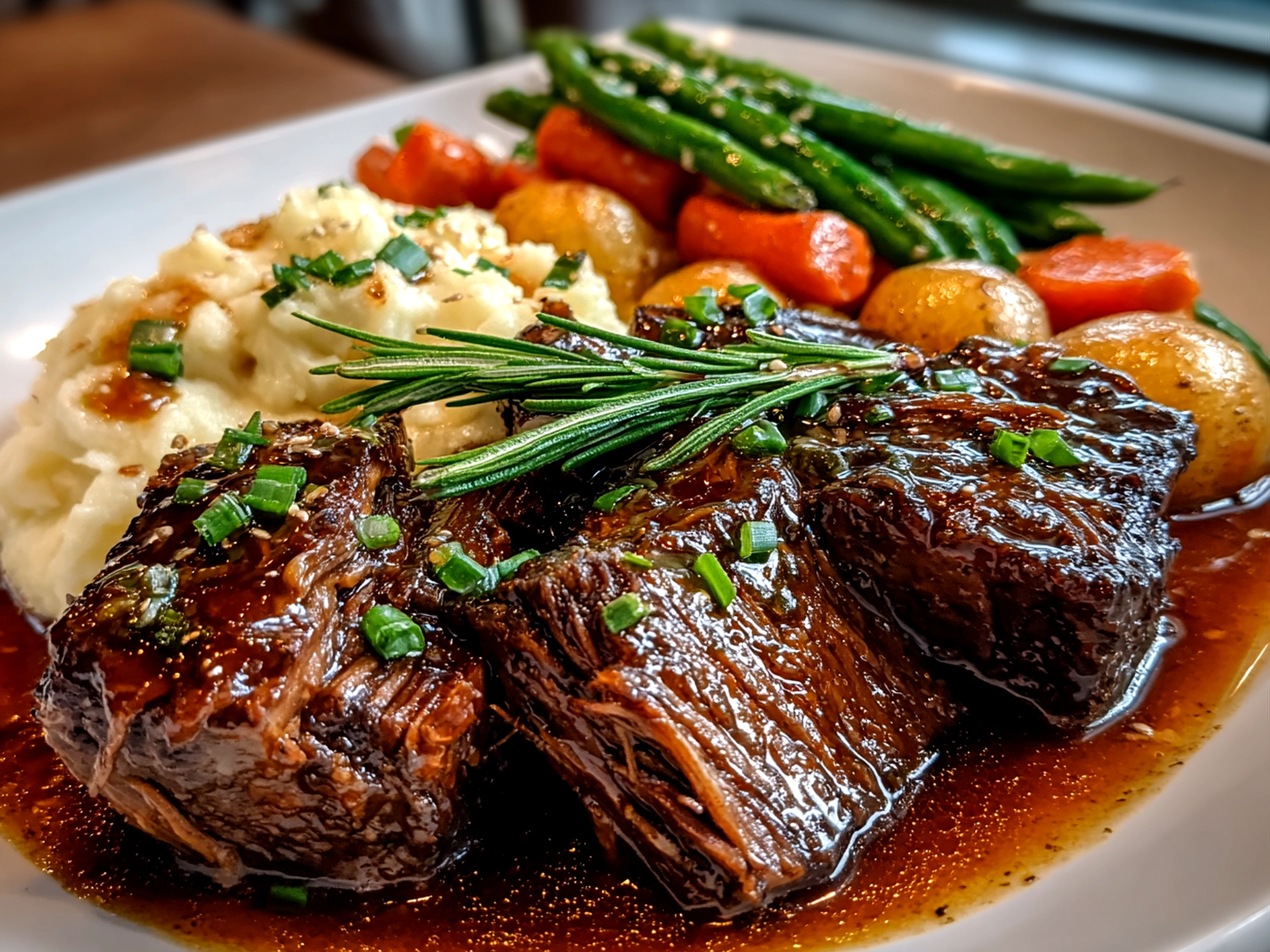
There’s something about the warm, rich aroma of a Korean Pot Roast simmering away on my stove that instantly takes me back to cozy family dinners when I was growing up. It wasn’t until a few years ago that I discovered the magic of this dish for myself—this tender, melt-in-your-mouth Korean braised beef that’s steeped in a soy sauce pot roast glaze, with all those delightful layers of flavor. Let me tell you, Korean Pot Roast is not just any old stew; it’s like a hug in a pot, and my family can’t get enough of it.
I remember the first time I tried to make Korean Pot Roast, or as some call it, Galbi jjim—basically braised short ribs Korean style. I was a bit intimidated by the long cooking time and the variety of ingredients. I almost gave up when I thought I’d overcooked the meat, but with a little patience and some kitchen intuition, I nailed it. The beef was tender and infused with the sweetness of Korean radish and the savory richness of soy sauce. That aha moment made me realize how much a slow-cooked Korean style beef stew could bring people to the table, hungry and happy. It’s now one of our go-to comfort meals for busy weeknights and special occasions alike.
What I truly adore about this Korean Pot Roast is its ability to fit seamlessly into my family’s hectic life. I can start it in the morning, then get on with other tasks—thank goodness for slow cookers! Plus, it freezes beautifully, so leftovers become quick lunches or dinners during the week. This recipe reminds me that even on busy days, I can still nourish my loved ones with something heartfelt and home-cooked. If you want to get a better feel for what I mean, you can peek at this recipe for Slow Cooker Galbijjim (Korean Braised Short Ribs)—it’s a great companion to the Korean Pot Roast I’m about to share.
One of my favorite things about Korean Pot Roast is how the flavors meld together—the soy sauce pot roast base mingling with hints of garlic, ginger, and just the right touch of sweetness. It’s a dish that always sparks conversation and brings smiles at my dinner table. Trust me, once you try making your own Korean Pot Roast, you’ll wonder why it took you so long to discover this gem. So, why don’t we roll up our sleeves and dive into making this Korean style beef stew that my family and I just adore? It’s easier than you think, and I’m here to walk you through every step with all the little tips I’ve picked up along the way. Plus, if you’re curious about other cozy dishes, you might want to try my Roasted Vegetable Soup—perfect as a light starter when serving Korean Pot Roast.
What You’ll Need for This Korean Pot Roast
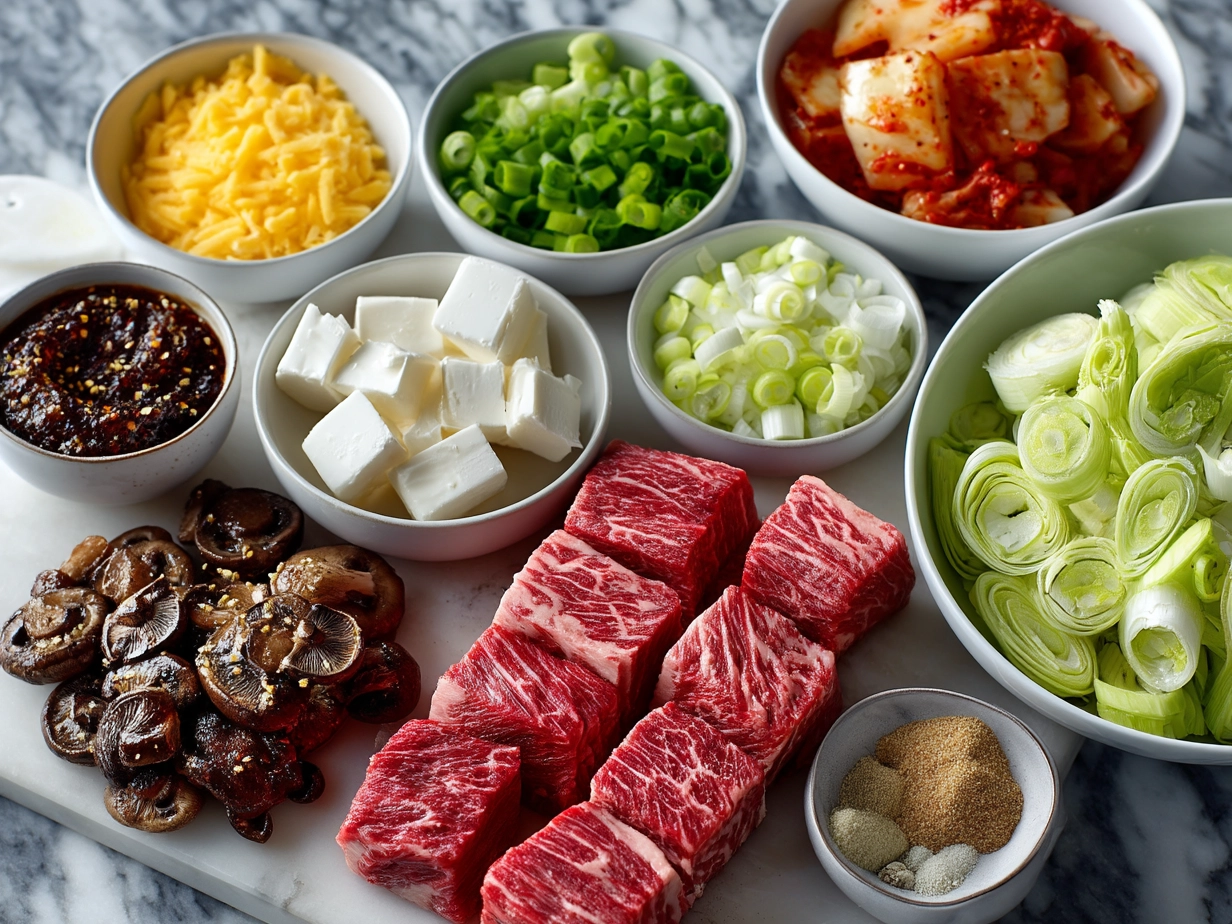
Before we jump into making this amazing Korean Pot Roast, let’s gather everything we need. I always find that having all the ingredients prepped and ready makes the whole process smoother, especially if you’re juggling family or work. Here’s my personal go-to ingredient list for the Korean Pot Roast that guarantees a rich, comforting dish every single time:
Ingredients:
- 3 pounds beef chuck roast or braised short ribs Korean style beef cuts – I prefer chuck roast for its balance of flavor and tenderness, but braised short ribs Korean cuts work beautifully too.
- 1 large Korean radish (mu), peeled and cut into chunks – adds a subtle sweetness and soft texture.
- 1 medium onion, sliced
- 6 cloves garlic, minced
- 2-inch piece of ginger, peeled and minced
- 1/2 cup soy sauce (preferably Korean soy sauce: ganjang)
- 1/4 cup brown sugar or Korean corn syrup (mulyeot)
- 1/4 cup rice wine or mirin
- 2 cups beef broth or water
- 2 tablespoons sesame oil
- 2 green onions, chopped for garnish
- 1 tablespoon toasted sesame seeds (optional)
- 1 large carrot, cut into chunks
- 1 cup shiitake mushrooms (optional)
When I shop for Korean Pot Roast ingredients, I often find the Korean radish and ganjang soy sauce at my local Asian grocery store—if you have one nearby, it’s worth the adventure! If not, a regular daikon radish and good quality soy sauce will do just fine. Here’s a Korean Pot Roast trick I learned from a Korean friend: soaking the beef in cold water for 30 minutes before cooking helps remove excess blood and results in a cleaner broth flavor. It also helps in trimming the fat if you want a leaner dish.
As for time-saving tricks, prepping veggies while the beef soaks lets you multitask and reduces total cooking time—perfect for busy families wanting to enjoy authentic Korean Pot Roast without the fuss. And, if you end up with leftover ingredients, like radish or green onions, they store well in the fridge for several days or freeze nicely if you’re meal prepping multiple Korean Pot Roast dinners. When it comes to cost, choosing chuck roast cuts can really help save some bucks compared to pricier short ribs, and they still deliver that melt-in-your-mouth texture we all love.
For more tips on ingredient sourcing and Korean braised beef tricks, you might find this Asian-style pot roast with tender beef and radish post interesting—it’s always great to hear from others who’ve fallen in love with the dish as much as I have.
Let’s Make This Korean Pot Roast Together
Ready to cook some Korean Pot Roast? Don’t worry if it sounds fancy—it’s more about low and slow cooking than any tricky technique. I’m going to walk you through my kitchen-tested steps for this Korean style beef stew that you and your family will adore.
1. Prepare the beef: Start by soaking your beef chuck roast in cold water for about 30 minutes to remove excess blood—this gives your Korean Pot Roast a clear and clean broth. After soaking, pat the meat dry with paper towels.
2. Brown the beef: Heat a large heavy pot (I love using my Dutch oven) over medium-high heat. Add a splash of sesame oil and brown the beef chunks on all sides—this step builds that rich, soy sauce pot roast flavor. Don’t rush this; browning truly deepens the taste.
3. Add aromatics and liquids: Toss in the minced garlic and ginger, stirring until fragrant. Then pour in the soy sauce, brown sugar (or Korean corn syrup), rice wine, and beef broth. Stir everything together. Your Korean Pot Roast should start to smell incredible here—like sweet, savory comfort.
4. Add vegetables: Add the onion, radish, carrot, and shiitake mushrooms if you’re using them. Cover the pot and reduce heat to low.
5. Simmer gently: Let your Korean Pot Roast cook slowly for about 2.5 to 3 hours, turning the meat occasionally. This is the part where patience pays off: the beef becomes tender and the flavors meld perfectly. If you’re short on time, this is a great moment to use a slow cooker or pressure cooker, like I shared in this Slow Cooker Galbijjim (Korean Braised Short Ribs) recipe.
6. Check seasoning: About 30 minutes before done, taste your soy sauce pot roast broth and adjust seasoning with a touch more soy sauce or sugar if needed.
7. Finish and serve: Once the meat is tender and sauce thickened slightly, garnish with green onions and toasted sesame seeds. Trust me, the scent of this Korean Pot Roast at the finish line is pure heaven.
While the Korean Pot Roast is cooking, I often prep my sides or tidy up—anything to keep myself moving so the wrist doesn’t get tired from stirring and tasting! A little kitchen dance to my favorite music doesn’t hurt either. If you want some ideas on side dishes to complement the Korean Pot Roast, you might like my Roasted Garlic Potato Soup or my crispy Roasted Brussels Sprouts—both crowd-pleasers alongside a hearty Korean style beef stew. And if you find the sauce too intense, a splash of water or broth helps mellow it out.
Don’t stress about making the Korean Pot Roast perfect the first time; I’ve had my fair share of overcooked edges or bland batches. Adjusting seasoning and slow-cooking times based on your beef cut and stove heat helps perfect your own family’s Korean Pot Roast style. You got this!
How I Love to Serve This Korean Pot Roast
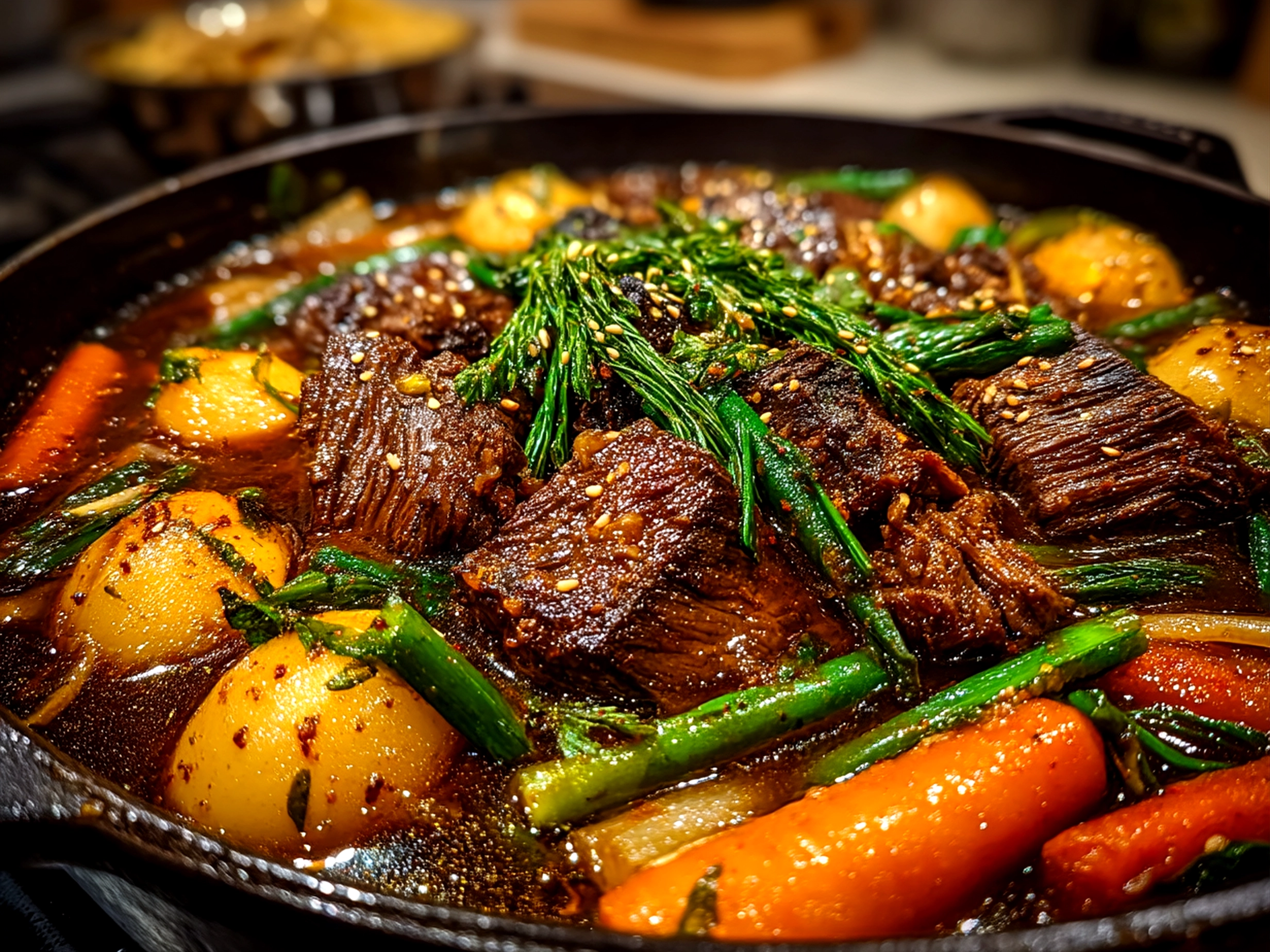
My family absolutely adores the Korean Pot Roast served over a bed of steamed white rice—the perfect canvas for soaking up every bit of that soy sauce pot roast goodness. My kids ask for seconds every time, claiming it’s “the best dinner ever,” which warms my heart like nothing else. Plus, I love pairing it with simple sides that balance the rich, savory flavors, like lightly sautéed greens or crisp kimchi for some zing.
If I’m hosting a casual dinner party, Korean Pot Roast is my go-to. It’s comforting and impressive without a fuss. The rich, tender beef combined with braised vegetables creates a plate that’s both hearty and elegant. Friends always ask for the recipe after tasting it, and it’s so satisfying to pass along my version of this Korean braised beef classic.
During the colder months, I sometimes swap out the radish and carrots for sweet potatoes or pumpkin to add a seasonal twist to the Korean Pot Roast. It gives a beautiful sweetness that pairs wonderfully with the soy sauce pot roast base. For a lighter summer variant, I might add more mushrooms and skip heavier root vegetables.
Got leftovers? No worries. I like to shred the Korean Pot Roast meat and mix it into bibimbap bowls or even make Korean-style tacos with it—talk about versatile! Also, if you want more inspiration on how to present your dish, check out this space where I shared some plating ideas alongside Korean braised beef and other hearty stews.
Serving Korean Pot Roast with simple steamed vegetables or a fresh cucumber salad also adds a refreshing crunch that contrasts beautifully. Plus, these easy side dishes mean less time in the kitchen and more time enjoying the meal with loved ones.
Your Korean Pot Roast Questions Answered
You probably have some questions about Korean Pot Roast—I’ve gathered the ones I get asked most often, and I’m here to share what I’ve learned (sometimes the hard way!) so you don’t have to stumble around as much as I did.
A: Great question! Galbi jjim specifically refers to Korean braised short ribs, while Korean Pot Roast is a broader term that can use chuck roast or other beef cuts but cooks similarly with that soy sauce pot roast flavor. I’ve found my family enjoys both, but Korean Pot Roast with chuck is a more budget-friendly, everyday option.
A: Absolutely! In fact, Slow Cooker Galbijjim (Korean Braised Short Ribs) inspired me to adapt my recipe for both slow cooker and pressure cooker versions. Using these devices helps with timing and frees you up to do other things—which is a lifesaver when juggling family dinners.
A: We’ve all been there with soy sauce pot roast dishes. I usually add a bit of water or unsweetened broth to balance the saltiness, or toss in extra vegetables like radish or potatoes to absorb some of the salt. Tasting early and gradually adding soy sauce helps, too.
A: The secret is low heat and time—slow and steady wins the race here. I also learned that trimming excess fat and cutting meat into chunks helps it cook evenly. Using a meat cut with some marbling like chuck roast gives that perfect tender texture without drying out.
A: Totally! In fact, Korean Pot Roast tastes even better the next day as flavors continue to develop. Just cool completely, refrigerate, and reheat gently on the stove. Leftovers can also be frozen in portions for up to 3 months.
A: I’m a huge fan of pairing it with kimchi, steamed rice, and quick sautéed bok choy. It balances the richness beautifully. For ideas, check out my Roasted Brussels Sprouts recipe—those crisp sprouts add a nice contrast.
A: Of course! Mushrooms, sweet potatoes, and even daikon radish work wonderfully. The key is to add veggies that soak up the soy sauce pot roast flavor without overpowering the beef. I’ve had readers share their versions with pumpkin and eggplant, and those are delicious twists too.
If you’re curious about troubleshooting or want some fresh ideas from fellow home cooks, this Reddit post discussing stew meat with Asian flavors helped me a lot.
My Final Thoughts on This Korean Pot Roast
This Korean Pot Roast recipe holds such a special place in my kitchen and heart—it’s more than just food; it’s connection, comfort, and family memories simmering in a pot. Watching my family gather, plates heaping with tender beef from this Korean style beef stew, always reminds me why I love cooking so much.
My Korean Pot Roast Pro Tips:
- Always brown your meat well; it makes such a huge difference in the depth of flavor.
- Don’t rush the simmering—low and slow brings out the tender magic.
- Use Korean radish when you can; it adds a subtle sweetness that’s signature to Galbi jjim and makes the dish authentic.
Over the years, I’ve tried variations—from traditional braised short ribs Korean style to using chuck roast or even mixing in more mushrooms and seasonal veggies. My husband is all about the classic soy sauce pot roast flavor, while my kids love it with extra carrots and a bit more sweetness. That’s the joy of cooking Korean Pot Roast—you can make it your own.
If you want to keep cozy flavors going, why not try my Roasted Vegetable Soup next? It’s perfect for pairing with Korean stews or as a lighter side.
I encourage you to give this Korean Pot Roast recipe a try—it’s approachable, nourishing, and truly joyful to share at your table. Remember, each family’s version will be unique, and that’s part of the fun. So, slip on your apron, and let’s make Korean Pot Roast a new favorite in your home just like it is in mine! You’ll be surprised how quickly this fragrant, tender dish wins hearts at your table.
If you ever want to chat more about Korean Pot Roast adventures or swap tips, I’m always here in the kitchen with you. Happy cooking, friend!
Korean Pot Roast
This Korean Pot Roast is a flavorful and tender beef dish simmered in a savory-sweet sauce infused with classic Korean ingredients, perfect for a comforting dinner.
- Prep Time: 15 minutes
- Cook Time: 180 minutes
- Total Time: 195 minutes
- Yield: 6 servings
- Category: Dinner
- Method: Baked
- Cuisine: Korean
Ingredients
- 3 lbs beef chuck roast
- 2 tbsp vegetable oil
- 1 large onion, sliced
- 4 cloves garlic, minced
- 1-inch piece ginger, grated
- 1/2 cup soy sauce
- 1/4 cup brown sugar
- 2 tbsp gochujang (Korean chili paste)
- 1 tbsp sesame oil
- 1 cup beef broth
- 2 green onions, sliced
- 1 tbsp toasted sesame seeds
- 1 tsp black pepper
- 2 medium carrots, cut into chunks
- 2 medium potatoes, cut into chunks
Instructions
- Preheat a large Dutch oven or heavy pot over medium-high heat and add vegetable oil.
- Sear the beef chuck roast on all sides until browned, about 4-5 minutes per side. Remove and set aside.
- In the same pot, add onions, garlic, and ginger; sauté until fragrant and softened, about 3 minutes.
- Stir in soy sauce, brown sugar, gochujang, sesame oil, and black pepper to form the sauce.
- Return the roast to the pot and add beef broth, carrots, and potatoes.
- Bring to a simmer, cover, and reduce heat to low. Cook for 2.5 to 3 hours until the beef is tender.
- Remove the roast and let it rest for a few minutes; slice or shred before serving.
- Serve topped with sliced green onions and toasted sesame seeds for garnish.
Notes
For extra depth of flavor, marinate the beef in the sauce mixture for 1 hour before cooking or serve with steamed rice and kimchi on the side.